
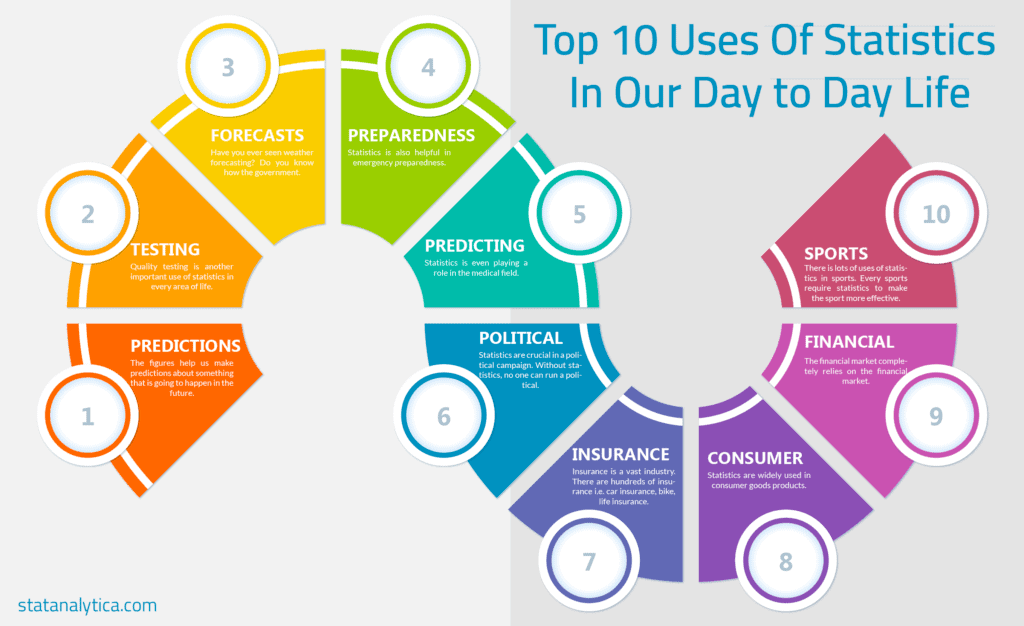
As a data scientist, your toolkit is packed with a variety of powerful tools, but none are more essential than statistical concepts. These foundational principles are the backbone of data analysis, enabling you to make sense of complex datasets, draw meaningful conclusions, and guide informed decision-making. Mastery of statistics is not just beneficial—it’s critical for navigating the data-rich landscape of today’s industries.
Descriptive Statistics: The Building Blocks of Data Analysis
Think of descriptive statistics as the foundation of a house—they provide a stable base from which all data analysis begins. Key measures like the mean, median, and mode offer a snapshot of your data’s central tendency, while variance and standard deviation reveal its spread. These measures help you understand the basic characteristics of your dataset, allowing you to move beyond raw numbers to uncover trends and insights.
For example, in the healthcare industry, understanding the average length of hospital stays or the variation in patient outcomes can provide critical insights into operational efficiency or patient care.

Hypothesis Testing: Proving or Disproving Claims
Hypothesis testing is akin to a detective investigating a crime scene. You begin with a hunch—known as the null hypothesis—and then gather evidence (data) to either support or refute it. Techniques such as T-tests, ANOVAs, and chi-square tests are your investigative tools, helping you determine whether observed patterns are statistically significant or the result of random chance.
For instance, in marketing, hypothesis testing can help determine whether a new ad campaign significantly increases sales compared to previous efforts. This data-driven approach allows businesses to make strategic decisions with greater confidence.

Regression Analysis: Unraveling Relationships
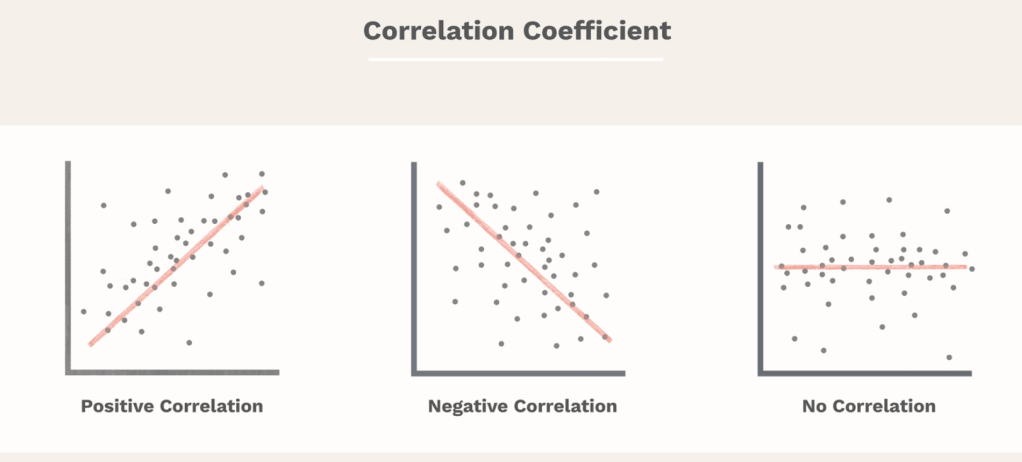
Regression analysis is the Sherlock Holmes of data science. It’s a tool that helps you uncover and quantify the relationships between variables. Whether you’re predicting house prices based on features such as square footage and location, or assessing the impact of different marketing channels on sales, regression models are invaluable for understanding cause-and-effect dynamics.
Simple linear regression might help you predict outcomes based on one variable, while more complex models like multiple regression can reveal how multiple factors interact to influence an outcome. By using regression analysis, businesses and researchers can make predictions and optimize strategies with a higher degree of precision.
Probability and Distributions: The Foundation of Uncertainty
In the world of data science, uncertainty is unavoidable—but that’s where probability comes in. Probability theory helps quantify uncertainty and provides a framework for making decisions when outcomes are uncertain.
Distributions such as the normal distribution, binomial distribution, and Poisson distribution are essential models that describe the likelihood of different outcomes. For example, the normal distribution is frequently used in quality control processes to understand product variations, while the binomial distribution can be applied in A/B testing to evaluate the success of different marketing strategies.
These concepts allow data scientists to make educated predictions, even when working with incomplete information, making probability an indispensable tool in your toolkit.

Real-World Applications: Statistical Concepts in Action
Statistical techniques may not always get the spotlight, but they are the unsung heroes behind countless industries. Here are just a few examples of how these concepts play a crucial role:
- Healthcare: In healthcare, statistical models are used to analyze patient outcomes, predict the spread of diseases, and evaluate the effectiveness of treatment plans.
- Finance: Banks and investment firms use statistical analysis to assess risk, predict stock price movements, and identify market trends.
- Marketing: From customer segmentation to A/B testing, marketing teams rely on statistics to understand consumer behavior and optimize campaigns.
- Retail: Retailers use statistical models to forecast inventory needs, analyze sales data, and personalize product recommendations based on customer purchase history.
Statistical foundations not only drive the decision-making process but also enable innovation across industries, making data science a cornerstone of the modern world.

The statistical foundations that underpin data science are critical to making sense of the ever-growing amounts of data in today’s world. By mastering key concepts—such as descriptive statistics, hypothesis testing, regression analysis, and probability—you will be equipped to tackle any data challenge that comes your way. Armed with your statistical toolkit, you can unlock insights, inform decision-making, and drive progress in any field you choose to explore.
So, grab your tools and start building—the world of data science is vast, and these statistical foundations will help you navigate it with confidence.


Leave a Reply