
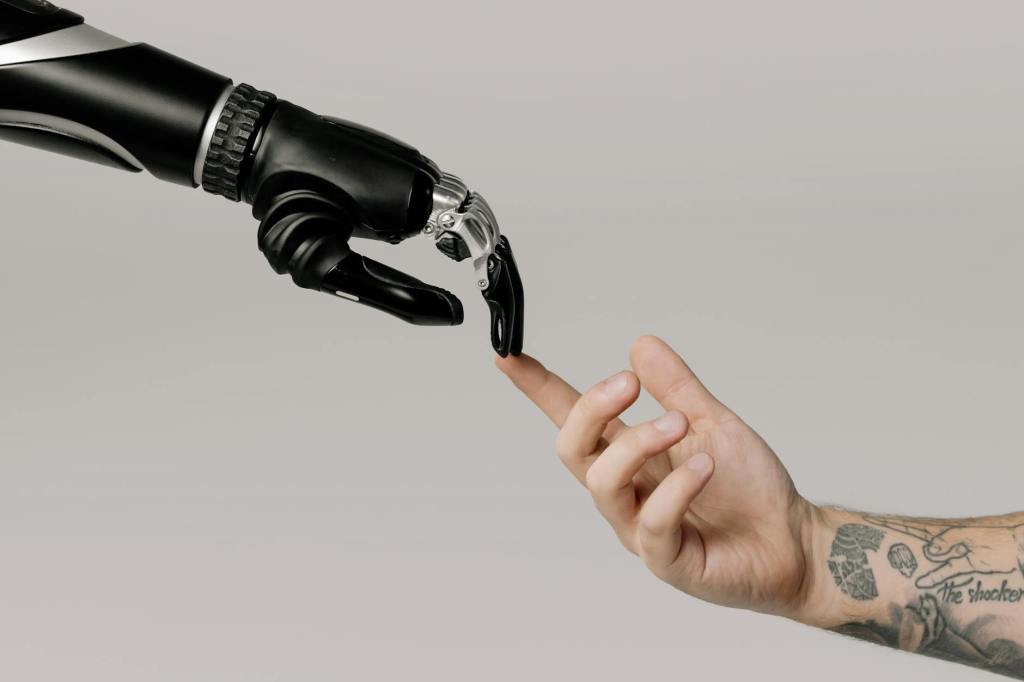
AI/NLP – A Double-Edged Sword
The rise of Natural Language Generation (NLG) brings with it undeniable power—machines that can write human-like text, at scale, with speed and precision. But like many groundbreaking technologies, NLG is a double-edged sword. While it offers efficiency and creativity, it also raises philosophical and ethical concerns about the future of work and the livelihoods of human writers, journalists, and content creators.
Would NLG—and broader AI advancements—disrupt entire industries? And what are the long-term implications for the jobs we hold today?
The Ramifications for Content Creators
As NLG becomes more advanced, the potential for automation grows, particularly in content-heavy industries like media, marketing, and customer service. This raises fundamental questions:
- The Role of Human Writers: If machines can generate news articles, product descriptions, and even creative stories, where does that leave human writers? Will the role of the content creator shift toward more strategic, editorial oversight, or will machines completely take over the bulk of content production?
- Job Displacement: Automation has already impacted industries such as manufacturing and retail, and NLG would have a similar effect on creative fields. As businesses adopt AI to handle writing tasks at scale, traditional roles for copywriters, journalists, and marketers would be diminished, leading to job displacement for those who once performed these tasks manually.
Example: Imagine a newsroom where AI generates most of the routine reports—sports recaps, financial summaries, or even basic event coverage. Journalists would then be tasked with more in-depth, investigative work, but how many jobs will remain in an industry where automation handles the majority of day-to-day writing?

A Philosophical Question – What Does It Mean to Create?
The heart of the issue goes beyond mere automation. There’s a deeper question at play: What does it mean to create in a world where machines can replicate human creativity?
- Creativity vs. Automation: Creativity has long been a hallmark of human endeavor. Whether it’s a novel, a screenplay, or a marketing campaign, creating has always been a deeply personal, human process. But as NLG begins to take on more creative roles, from writing poetry to generating alternate endings for Game of Thrones, the boundary between human and machine creativity blurs.
Will creativity remain uniquely human, or are we entering an age where machines not only assist but drive the creative process?
The Societal Disruption of Automation
The concern about automation and its potential to displace jobs is not new, but NLG touches on something deeper: the automation of thought, language, and culture. These are areas traditionally seen as purely human, and the impact of their automation would lead to significant social shifts.
- Impact on Education: If machines can generate essays, reports, and even research papers, how will we assess learning? Will the educational system need to rethink how we measure comprehension, analysis, and originality in the age of AI?
- Economic Inequality: As NLG and other AI technologies reduce the need for certain jobs, how will societies handle the growing gap between those who control the technology and those displaced by it? Will there be new roles for displaced workers, or will economic inequality widen?

Balancing Innovation and Ethics
Natural Language Generation offers incredible potential to transform industries, save time, and enhance creativity—but it also presents profound challenges. As NLG continues to evolve, society will need to find a balance between leveraging the power of automation and protecting the livelihoods of content creators, writers, and the jobs that rely on human ingenuity.
As we stand on the brink of this new era, the question is not whether NLG will disrupt our world, but how we will navigate this disruption—and whether we can harness AI’s power without losing the essence of human creativity.


Leave a Reply