
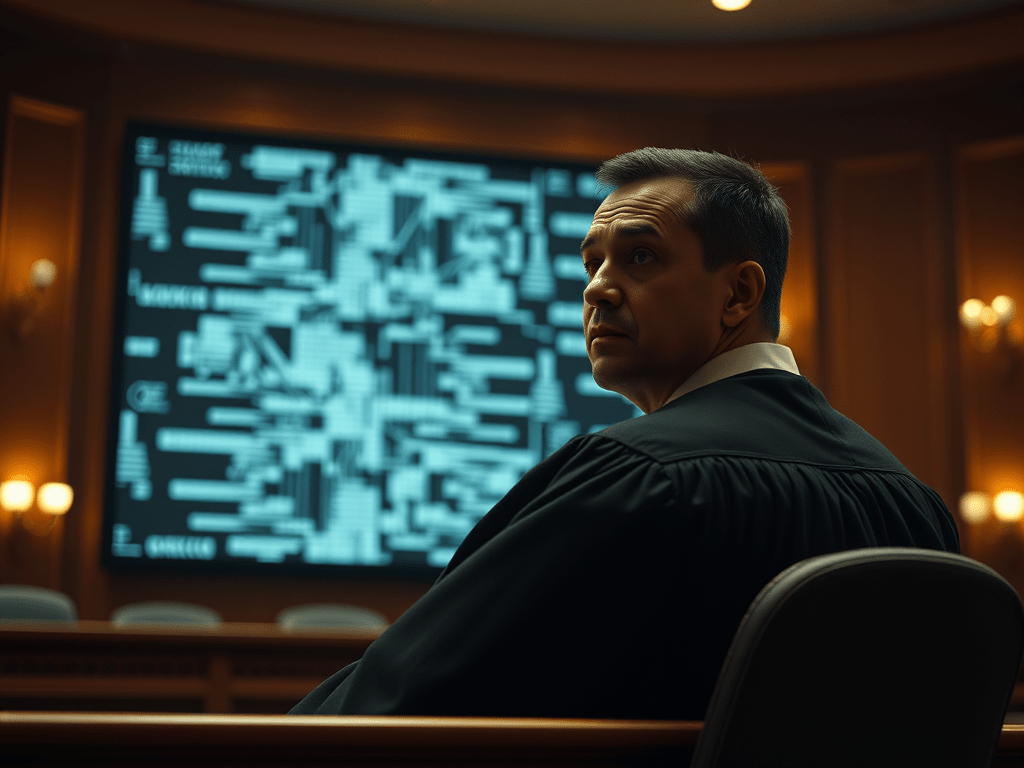
Introduction – When Bias Decides Lives
Imagine being in court, standing before a judge who must decide whether you’re a high risk to reoffend. Now imagine that instead of a human, an algorithm—a black box of data—makes that decision. For too many people, particularly in marginalized communities, this is not fiction. Algorithms are being used in criminal justice systems across the world, determining bail, sentencing, and even parole. But here’s the chilling truth: these algorithms are biased, and their decisions can be just as flawed as the humans they aim to replace.
When I was working on an AI project in healthcare, I encountered bias that disproportionately affected certain patient populations. It was an eye-opening experience. If bias can creep into life-saving models in healthcare, what does that mean for systems in criminal justice, where lives and freedom hang in the balance?
The Urgency of AI Bias – Cascading Effects Across Society
AI is revolutionizing industries—from healthcare to criminal justice—but with that power comes significant responsibility. Cognitive biases, as studied by Kahneman and Tversky, have always influenced human decisions. Unfortunately, we’re seeing these same biases coded into AI systems. These biases don’t just perpetuate the status quo—they exacerbate inequalities, creating cascading effects throughout society.
In criminal justice, biased AI systems like COMPAS have flagged Black defendants as “high risk” at twice the rate of white defendants, leading to unnecessary pretrial detention. In healthcare, biased models can misdiagnose or mistreat patients based on race or socioeconomic status. These systems are shaping outcomes that can define a person’s future, often with dire consequences for marginalized groups.

Types of Bias in AI – The Roots of Inequality
Bias in AI takes many forms, but three are particularly pernicious:
- Data Bias: The data used to train AI models often reflects societal inequalities. For example, facial recognition systems are notoriously less accurate for people of color because the datasets used to train these systems are predominantly white. In criminal justice, AI systems trained on biased policing data reproduce and reinforce these disparities, misjudging risk and perpetuating cycles of incarceration.
- Algorithm Bias: Even if the data is unbiased, the algorithm itself can amplify existing inequalities. Some algorithms are designed in ways that favor certain outcomes over others, making biased decisions more likely.
- Confirmation Bias: AI systems, once trained, may consistently reinforce existing patterns, confirming pre-existing societal biases. In criminal justice, this can result in recidivism predictions that are skewed, flagging individuals based on past data rather than true behavioral risk.
My Project: Combating Bias in Criminal Justice – Judging the Judges
While working on machine learning bias in the criminal justice system, I witnessed firsthand the devastating effects of algorithmic bias. The current algorithms used for sentencing and bail decisions—like COMPAS—are flawed, disproportionately flagging Black defendants as high-risk, leading to higher rates of unnecessary pretrial detention and longer sentences.
That’s why we developed the Algorithmic Judge Oversight System (AJOS). Unlike traditional risk assessment tools, AJOS does not judge defendants—it judges the judges. By monitoring judicial decisions for bias and deviation from standard practices, AJOS ensures that human decisions are fair and consistent. It provides transparency and accountability, flagging decisions that may be biased and offering insights into how judges can improve their fairness.
The Cascading Consequences of Bias – Discrimination, Mistrust, and Injustice
The consequences of bias in AI systems are not just statistical—they are deeply personal. For every defendant wrongfully detained, every patient misdiagnosed, there is a life that’s profoundly affected. Bias in AI:
- Perpetuates Discrimination: In the criminal justice system, Black and minority defendants are misclassified at alarming rates, leading to a cycle of incarceration that devastates communities.
- Erodes Trust: Public trust in AI and the institutions that use it is undermined when bias is exposed, making it harder to implement AI systems that could have a positive impact.
- Limits Accuracy and Fairness: Biased AI systems are less effective and accurate, which can have dangerous consequences when they’re used to make decisions that affect lives.

The Path Forward – Building Fairer AI Systems
So how do we fix this? Here’s where we can start:
- Diverse, Representative Data: AI models must be trained on data that reflects the diversity of the real world. In the criminal justice system, this means incorporating data that is not skewed by biased policing or historical inequalities.
- Bias Detection and Mitigation: We need to invest in tools that can detect bias in AI systems early and often. Just as we use software to test for bugs, we should be testing for bias.
- Human Oversight: AI should never be making decisions in isolation. AJOS is a prime example of how AI can be used to augment human judgment, not replace it. By providing oversight and transparency, AI can help ensure that humans are making fairer decisions.
- Ethical Guidelines: Developing AI systems requires clear ethical frameworks that prioritize fairness and equity over efficiency. These guidelines must be rigorously applied to prevent future injustices.
A Call for Action Now
AI is a powerful tool—but with great power comes great responsibility. If we fail to address bias in AI systems, we risk reinforcing the very inequalities we aim to eradicate. The Algorithmic Judge Oversight System (AJOS) is a step toward a fairer future, where AI works hand-in-hand with humans to create a more equitable society. We need to act now, with urgency and intention, to ensure that the technologies we build serve all of us, not just the privileged few.
By addressing AI bias head-on, we can build a future where technology promotes fairness and equality, rather than perpetuating the biases of the past.


Leave a Reply