
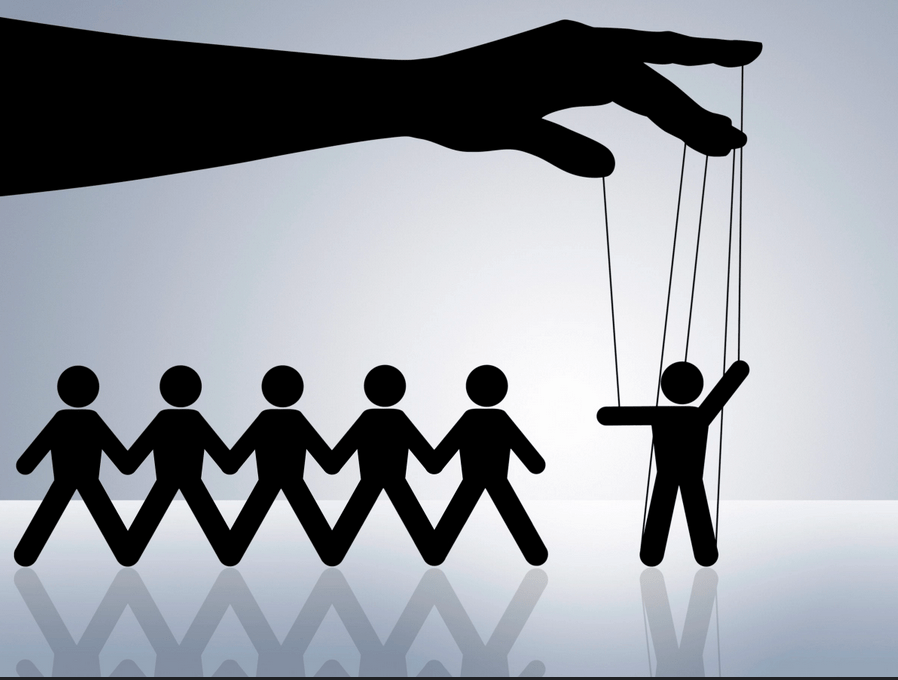
Introduction – The Illusion of Free Will?
Have you ever wondered if you’re truly in control of your decisions? Are the choices we make daily—what to eat, where to go, who to talk to—products of our own free will? Or are they the inevitable outcomes of causes we do not even recognize?
Neuroscientist Sam Harris argues that free will is an illusion. According to Harris, everything we think, every decision we make, is predetermined by a series of prior causes—our genetics, environment, and unconscious brain activity—all of which we have no control over. In his view, free will is a comforting illusion, not a reality.
On the other hand, philosopher Daniel Dennett suggests we have degrees of freedom. While we are influenced by external factors, Dennett claims that we have some agency in navigating them—degrees of freedom that allow us to exert some control over our actions.
This tension between free will and determinism is not simply just a philosophical debate, it has real-world implications—particularly when we look at predictive analytics and how it’s reshaping society. What if, as Harris suggests, our actions are already predictable? What does that mean for privacy, autonomy, and the future of human freedom?
Predictive Analytics – When the Machine Knows Your Next Move
If Harris is right, and our decisions are shaped by prior causes, then it stands to reason that with enough data, AI systems would accurately predict our behavior. Thus enter predictive analytics—the use of data, algorithms, and statistical techniques to predict future outcomes based on past behavior.
Think of how Amazon recommends products, Netflix suggests movies, or Google targets ads based on your search history. These systems analyze enormous amounts of data to predict what you like or do next. But what happens when we extend this predictive power beyond shopping and entertainment? What if AI can forecast how you’ll vote, where you’ll travel, or who you’ll date?
Predictive analytics is already being used in predictive policing, where AI forecasts areas likely to experience crime, and even in healthcare, where systems predict disease progression. But as these systems become more sophisticated, they start to feel like something more than just tools—they feel like they’re tapping into a deeper truth about human behavior.
If we can predict behavior with high accuracy, are we exercising free will, or are we simply acting out preordained scripts based on data patterns?
Bias and Heuristics – Predicting the Predictable
Even without AI, humans are already predictable in many ways. The work of Daniel Kahneman and Amos Tversky on cognitive biases shows us that our decisions are frequently less rational than we’d like to believe. We rely on mental shortcuts—heuristics—that allow us to make quick judgments, but they often lead us astray.
For example, we might buy a product based on availability bias (the first option we see) or make decisions based on confirmation bias (we seek out information that confirms our preexisting beliefs). These biases, combined with the sheer amount of data companies collect, make us highly predictable.
The question is no longer whether AI can predict behavior—it can. The real question is how this predictability affects our sense of freedom. If our decisions are so easy to forecast because of our biases, does that reinforce Harris’s argument that free will does not exist?
Data – The Backbone of Predictive Power
The real engine behind predictive analytics is data. Every click, every online purchase, every GPS signal from your phone contributes to a massive pool of information that AI can analyze to predict your next move.
But this also brings up ethical concerns. If companies, governments, or even malicious actors can predict your behavior, can they manipulate it? Are we entering a world where choice is an illusion and all our actions are shaped by subtle nudges from data-driven systems?
Think about social media platforms. They use predictive analytics to keep you engaged, showing you content that will trigger specific reactions. We think we’re scrolling by choice, but are we? Or are we being guided by algorithms that know our behaviors better than we do?
But this ability to predict does not stop at consumer behavior. In China, the government uses predictive analytics through its social credit system. Citizens are assigned a score based on their actions—ranging from online activity to financial decisions to even personal relationships. This score dictates their ability to travel, borrow money, or access services.
The system is designed to promote “good” behavior, but it also serves as a mechanism of control. Citizens are monitored, and their actions are assessed by algorithms, which then predict their future behavior and adjust their score accordingly. In many ways, this system embodies Harris’s view of free will: actions are not chosen but predetermined by algorithms that analyze and predict behavior.
China’s social credit system may be an extreme case, but it serves as a warning of what could happen when data and predictive power are used to control rather than liberate.
The Societal Impact – Privacy and Autonomy in the Age of Prediction
If predictive analytics can anticipate our choices, the implications for privacy and autonomy are staggering. Governments would use predictive systems to profile citizens, determining who will pose a threat based on patterns in their online activity. Companies would shape your consumer behavior, pushing you toward products you’re likely to buy before you even think of them.
This does not just erode privacy—it challenges the very concept of individual autonomy. If algorithms can predict your behavior, it suggests that your actions are predefined by past data, not by independent choice.
Moreover, biases in AI models amplify these issues. As Kahneman and Tversky’s research shows, we’re already prone to bias in decision-making. If the data used to predict our behavior is biased, those biases are reinforced. For instance, predictive policing has been shown to disproportionately target minority communities, leading to injustice and further societal divisions.
Moreover, the implications for privacy and personal freedom become more profound. If our behavior can be predicted—and even manipulated—where does that leave the concept of autonomy? China’s social credit system is a real-world example of how predictive systems can erode individual freedoms. If predictive models can forecast our actions based on patterns, does it make our choices less meaningful? If AI can decide who gets a loan, who is allowed to travel, or who is deemed trustworthy, are we truly making decisions?
The blending of predictive power and surveillance technology leads us to a critical ethical crossroad. While these systems can help reduce crime or improve efficiency, they can also impose restrictions, curtail privacy, and shape behavior in ways that challenge our sense of self-determination.
The future of predictive analytics raises a haunting question: If our actions are predictable, what happens to our sense of agency and freedom?
Conclusion – Free Will in the Age of Prediction
We are at a crossroads. As predictive analytics becomes more powerful, the line between free will and determinism blurs. If Sam Harris is right and our actions are simply the result of prior causes, then predictive systems are not just tools—they are windows into the fundamental nature of human behavior.
Again, what does this mean for society? Should we be excited about the potential of predictive analytics to improve healthcare, reduce crime, and make life more convenient? Or should we be alarmed at the loss of privacy and autonomy that comes with living in a world where every move can be anticipated?Truthfully, we do not have a clear answer so for now, perhaps we need to accept a middle ground—one where we recognize the predictability of human behavior while still striving for ethical boundaries that preserve our sense of freedom and dignity. The challenge is not just to understand what predictive analytics can do but to determine how far we’re willing to let it shape our lives. And we need to start thinking about this now instead of later when it would be too late.
 Axe M. Ahmed
Leave a comment