

Introduction: The Transformative Power of AI
In today’s hyper-competitive environment, artificial intelligence (AI) is no longer a futuristic concept—it’s an essential driver of innovation and efficiency across industries. In 2021, global spending on AI systems was projected to surpass $120 billion, reflecting the urgent need for organizations to embed AI into their strategies or risk falling behind.
As a data scientist working across healthcare, education, and technology, I’ve seen firsthand how AI can be a catalyst for profound change. One of the most eye-opening projects I worked on was the launch of the Harvard Business Analytics Program (HBAP) at Harvard Business School. This experience provided me with unique insight into how AI can reshape not only the learning experience but also entire business operations. AI is no longer just a technological tool—it’s a strategic imperative for any organization aiming to stay ahead in the digital age.
AI in Education: Learning from HBAP
The role of AI in education is a window into its broader potential across industries. During the development of HBAP, we leveraged AI-powered tools to personalize learning paths, offer intelligent tutoring, and analyze performance data to identify areas where students were struggling.
In education, AI enables adaptive learning, where content is tailored to each student’s specific needs and learning pace. This level of personalization and insight has a direct parallel in the business world, where AI can optimize processes, deliver customized customer experiences, and generate predictive insights for decision-making. My work on HBAP showed me that AI, when implemented thoughtfully, can enhance both individual experiences and organizational outcomes.

A Strategic Imperative for All Organizations
In today’s landscape, AI is not just a nice-to-have feature—it’s a strategic imperative for organizations that want to thrive. As Professors Karim Lakhani and David Parkes from HBAP emphasized, businesses must view AI as more than just a technology. When integrated into core processes, AI drives innovation, efficiency, and better customer experiences.

However, adopting AI requires more than just plugging in the latest tools. Organizations need a well-crafted AI strategy that aligns with their specific business goals and anticipates the challenges they may face.
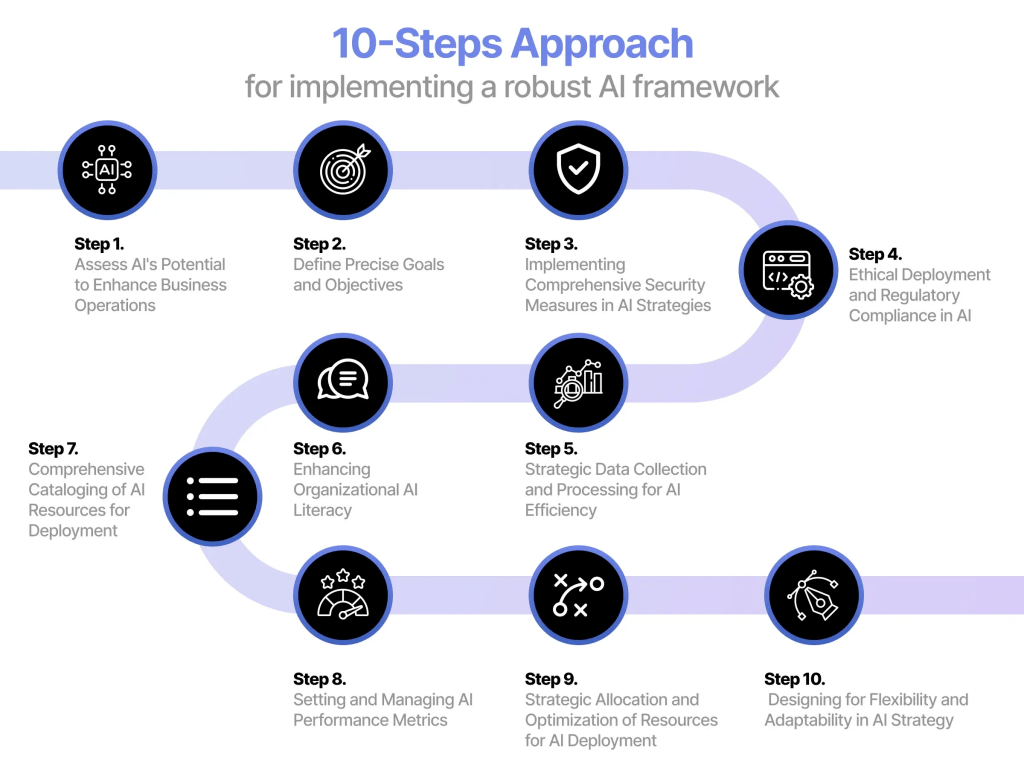
Crafting an Effective AI Strategy: A Step-by-Step Guide
Here are the critical steps to developing a successful AI strategy that aligns with your organizational needs:
1. Define Your Business Objectives
Before jumping into AI, it’s crucial to have a clear understanding of what you want to achieve. Do you want to improve operational efficiency, enhance customer experiences, or develop new products and services? Defining specific, actionable goals will help guide your AI initiatives.
Case Study: Netflix is a prime example of a company that defined a clear objective—improving user retention through personalized content. By focusing on personalization, Netflix has developed an AI-driven recommendation system that serves as the backbone of its customer engagement strategy. This strategic alignment between AI and business objectives has been key to their success.
2. Assess Your Data Readiness
AI is powered by data, but not all data is created equal. Evaluate the quality, quantity, and availability of your data. Is it accurate and comprehensive enough to support your AI initiatives? If not, consider investing in data governance and infrastructure improvements.
Challenge: Many organizations overestimate their data readiness. Without clean, well-organized data, AI models can produce inaccurate or misleading results. Investing in data management should be the foundation of any AI initiative.
3. Identify High-Impact Use Cases
Not every part of your business will benefit from AI equally, so it’s important to identify areas where AI can deliver the most value. Look for business processes that would benefit from automation, predictive insights, or personalization. Consider your industry and strategic priorities to focus on high-impact use cases.
For example, Amazon uses AI to streamline its supply chain, while Tesla leverages AI for autonomous driving technology. These are both cases where AI directly contributes to industry leadership and efficiency gains.
4. Build a Skilled, Multidisciplinary Team
AI implementation is not a one-person job. Assemble a multidisciplinary team of data scientists, engineers, and domain experts who understand both the technology and your business’s unique challenges. This team will need to collaborate closely to develop, deploy, and maintain AI solutions.
A successful AI strategy also requires leadership buy-in. The entire organization—from C-suite executives to department heads—must embrace a data-driven culture for AI to be successfully integrated into operations.
5. Invest in the Right Technology Infrastructure
AI requires a solid technological foundation to scale effectively. This includes cloud computing, data storage, and AI tools that can handle the large-scale processing necessary for training and deploying models. The right infrastructure will enable organizations to deploy AI at scale, adapting quickly to new data and needs.
Example: Google built its AI-driven infrastructure by investing early in cloud computing and data management systems, allowing them to run large-scale AI applications across their entire business.
6. Ethical Considerations in AI
As AI’s power increases, so does its potential for unintended consequences. Developing an AI strategy means considering its ethical implications—from bias in data to privacy concerns and accountability. Without thoughtful oversight, AI systems can reinforce societal inequalities or even violate individual rights.
Ethical Example: IBM has been a leader in promoting ethical AI by incorporating transparency and fairness testing into their AI models. In contrast, Amazon’s AI hiring tool faced criticism for discriminating against women due to biased training data. This underscores the importance of building systems with ethical frameworks from the start.
Conclusion: The Future Is AI-Driven—But Are You Ready?
AI is reshaping the business landscape, offering organizations unprecedented opportunities for innovation and growth. But the key to unlocking AI’s potential lies in a strategic approach—one that aligns with your business goals, data readiness, and long-term vision.
By defining clear objectives, investing in the right technology and talent, and embracing a culture of data-driven decision-making, organizations can harness the full power of AI. However, it’s equally important to approach AI with an eye on ethics, ensuring that it is used responsibly and equitably.The future of business is AI-driven. The question is: are you prepared to lead in this new era of intelligent technology?


Leave a Reply