

I still remember when Game of Thrones was at its peak, and every Sunday night, HBO had me glued to the TV. But once the episode ended, I was left wondering what to watch next. Would HBO suggest something in the same genre or surprise me with something new? That’s the magic of recommender systems—these algorithms help platforms like Netflix and Amazon understand what we enjoy and suggest content that’s tailored to our tastes.

In today’s digital world, we’re overwhelmed with options. From streaming services to online shopping, recommender systems play a crucial role in cutting through the noise, offering personalized recommendations based on our past behaviors and preferences. These systems not only enhance our entertainment experiences but shape the way we discover new content, products, and even people. It’s been well documented that the best predictor of future behavior is past behavior.
Types of Recommender Systems
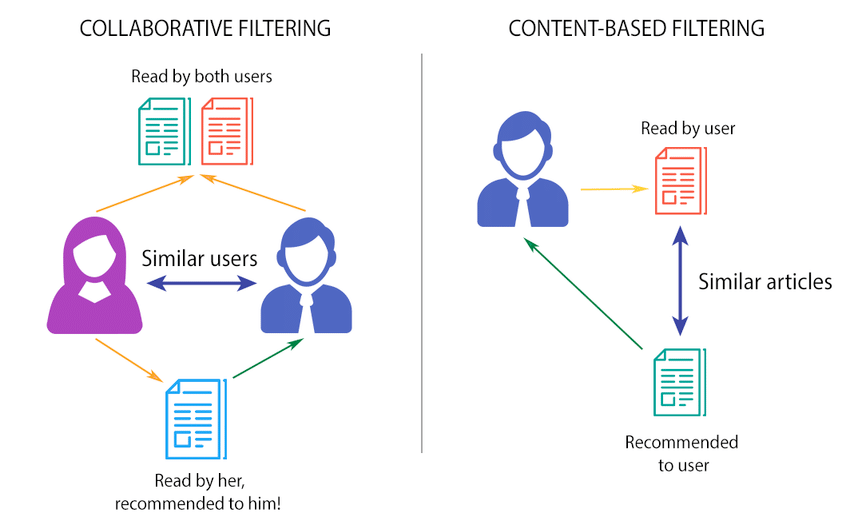
At the core of every recommender system are two primary approaches that determine how suggestions are made:
1. Collaborative Filtering
Collaborative filtering uses the power of collective preferences to make recommendations. It compares your tastes to those of others and recommends content or items based on what similar users have enjoyed.
- Example: After binge-watching Game of Thrones, collaborative filtering would suggest other shows like Westworld or The Witcher, because people who liked Game of Thrones also enjoyed similar epic, complex series.
2. Content-Based Filtering
Content-based filtering takes a different approach. Rather than looking at what other users have enjoyed, this method recommends items based on the attributes of the content itself. If you liked something with certain themes or characteristics, the system suggests similar content.
- Example: If you’ve been reading science fiction books, content-based filtering would suggest more books in the same genre or by the same authors. It looks at the themes, plots, and writing styles you’ve liked and finds similar works.
Key Techniques in Recommender Systems
Recommender systems rely on several key techniques to generate personalized suggestions, each designed to improve the accuracy and relevance of what’s recommended.
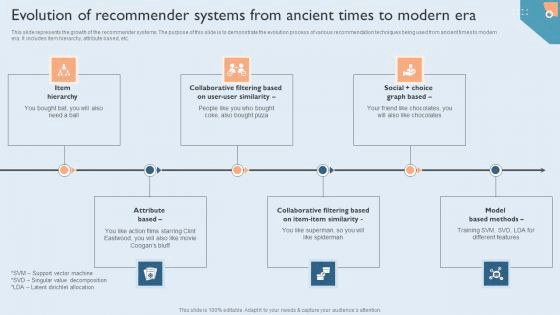
1. User-Based Collaborative Filtering
In user-based collaborative filtering, the system calculates the similarity between users based on their preferences or ratings. It then recommends content that other users with similar tastes have liked.
- Example: On Spotify, if two users consistently listen to the same playlists, the system would suggest a new album to one user based on the preferences of the other.
2. Item-Based Collaborative Filtering
Here, the system compares items instead of users. It looks for similarities between items and suggests content that is often enjoyed together.
- Example: On Amazon, item-based filtering would recommend that people who bought a phone case also bought screen protectors, based on how frequently these items are purchased together.
3. Hybrid Recommender Systems
Hybrid systems combine both collaborative filtering and content-based filtering. This approach balances the strengths of both methods to generate more accurate and diverse recommendations.
- Example: Netflix is famous for using a hybrid system. It looks at your past viewing habits (content-based) and compares them with the preferences of other users (collaborative) to recommend the next series you’re likely to binge-watch and spend countless hours of your life on.
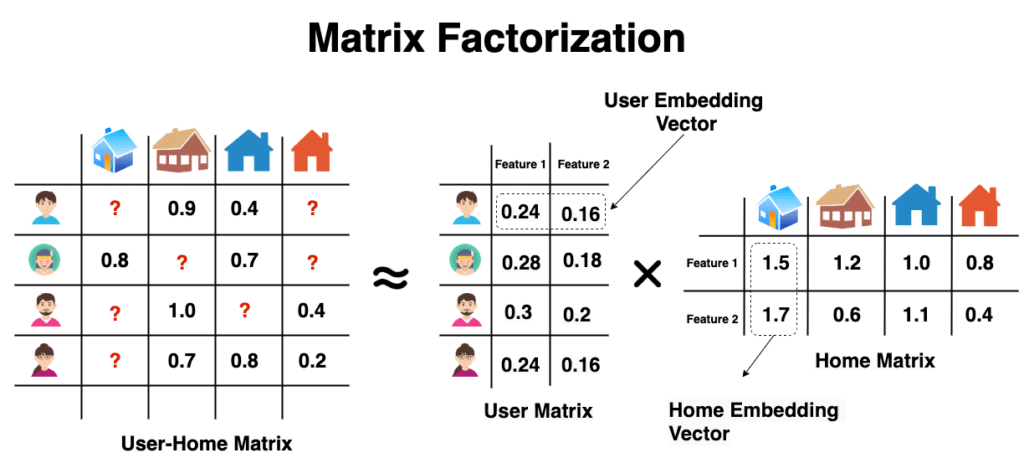
4. Matrix Factorization
Matrix factorization is a technique that breaks down the user-item interaction matrix into latent factors. These factors represent hidden preferences or characteristics that the system can use to make more personalized recommendations.
- Example: On Netflix, matrix factorization would reveal that you prefer shows with complex characters or intricate plot-lines, allowing the system to recommend dramas or thrillers that match these preferences, even if you haven’t explicitly searched for them.
Applying Recommender Systems In Business
Recommender systems have become indispensable across various industries, helping platforms deliver personalized experiences that keep users engaged and satisfied.
1. E-Commerce
E-commerce platforms like Amazon use recommender systems to suggest products based on your browsing and purchase history. These systems not only enhance your shopping experience but also increase the likelihood of making a purchase by showing you items you didn’t know you wanted but will most likely shell-out cash for.
Diving deeper into Amazon, ever wondered why they started out as a bookstore first? Books were easy to sell but more importantly, books offered insight into user preferences. Amazon was losing money on selling books but in exchange, they were gaining a vast amount of information on user preferences. Perhaps surprising to some but what books you read can tell a lot about what you like, enjoy and prefer; this was an ingenious strategy by Bezos which led Amazon to become the titan of a company it is now.
2. Streaming Services
Whether you’re using Netflix, Hulu, or Spotify, recommender systems are at work behind the scenes. They suggest movies, TV shows, and music based on your viewing or listening habits, ensuring that you always have something new and relevant to explore.
- Game of Thrones Example: After watching an episode of Game of Thrones, HBO would recommend similar shows like Vikings or Rome, knowing that viewers of epic fantasy often enjoy historical dramas with complex narratives.
3. Social Media
Platforms like Instagram and Facebook use recommender systems to suggest friends, groups, or content based on your interactions. These systems help curate your social feed, making sure you’re exposed to posts that are relevant to your interests and connections.
4. News Aggregation
News platforms such as Google News or Apple News use recommender systems to deliver articles tailored to your reading habits. Whether you’re interested in politics, sports, or technology, these systems ensure that you receive the most relevant news without having to sift through endless articles.
Challenges and Future Directions
While recommender systems have transformed how we discover content, they still face several key challenges:
1. The Cold-Start Problem
The cold-start problem occurs when a new user joins a platform or a new item is added, and there’s little data to base recommendations on. Without enough information, the system struggles to make accurate suggestions.
- Solution: Platforms often use demographic information, popular trends, or ask for initial user preferences to jump-start the recommendation process.
2. The Sparsity Problem
Recommender systems often deal with sparse data, where users interact with only a small fraction of the available content. This lack of interaction data makes it harder to find similarities and provide meaningful recommendations.
- Solution: Techniques like matrix factorization can help uncover hidden patterns, even in sparse datasets.
3. Bias and Filter Bubbles
Recommender systems can create filter bubbles, where users are only exposed to content that aligns with their existing preferences. This limits exposure to diverse viewpoints and content.
- Future Directions: Developers are working on algorithms that encourage diversity and introduce serendipity into recommendations, helping users discover content outside their usual bubble.
The Future of Recommender Systems
As recommender systems evolve, we can expect even more personalization and sophistication. Future systems will use real-time data and emotional context to offer even more tailored suggestions. Imagine a system that knows your mood and recommends a calming show after a stressful day, or one that adapts based on your current environment, suggesting the perfect playlist for a rainy afternoon.
Recommender systems have become a crucial part of our digital lives, shaping the way we discover new content, products, and even connections. From streaming services to online shopping, these systems are making our experiences more personalized and intuitive. And as technology continues to advance, the possibilities for even more accurate and diverse recommendations are endless. Next time you sit down to watch Game of Thrones or shop online, remember—there’s a recommender system working quietly in the background, tailoring content just for you; how special or scary is that!


Leave a Reply