

In 2016, the world witnessed a pivotal moment in the history of artificial intelligence in which we’re starting to witness the implications of it now. DeepMind’s AlphaGo, an AI trained through deep learning, defeated the world’s best Go player, Lee Sedol. The game Go is somewhat similar to Chess but far more difficult in strategy and in moves despite it’s simple rules. For many—including myself—it was a moment of disbelief. How can a machine master a game with more possible moves than there are atoms in the universe?

For perspective, it’s estimated the number of atoms in the universe to be on the order of 108, Go, the number of legal board positions has been calculated to approximately 2.1 x 10170. Recognizing this fact, that moment crystallized the true potential of deep learning and opened my eyes to the boundless possibilities of this technology.
Understanding Neural Networks
At the heart of deep learning are neural networks, which mimic the way the human brain processes information. These networks are composed of layers of artificial neurons that pass information from one layer to the next. As the layers deepen, the network becomes capable of learning and representing complex features in data that are often too abstract for traditional algorithms.
Types of Neural Networks
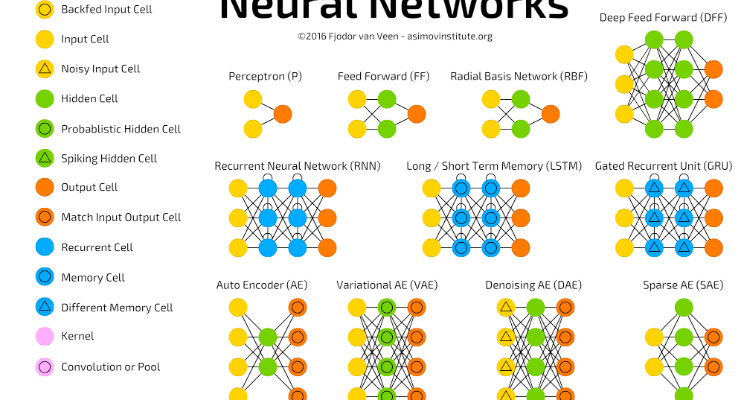
There are several types of neural networks, each designed for specific types of data and tasks:
- Feedforward Neural Networks (FNNs): The simplest type of neural network where information flows in one direction—from input to output. These are often used for straightforward classification tasks.
- Convolutional Neural Networks (CNNs): CNNs are designed to process grid-like data such as images and videos. They have revolutionized image recognition, enabling machines to identify objects, scenes, and even people in photos and videos.
- Recurrent Neural Networks (RNNs): RNNs process sequential data, making them ideal for tasks like language modeling and time series analysis. They use loops to allow information to persist across time, which is key for understanding context in text or predicting future events in a sequence.
- Long Short-Term Memory (LSTM) Networks: A type of RNN, LSTMs can remember information over longer periods, which makes them well-suited for speech recognition and tasks that require a deeper understanding of context over time.
My First Experience with Deep Learning
One of the most exciting moments in my deep learning journey was training my first deep neural network on a challenging image classification task. It felt like watching a child learn to walk—each improvement, each tiny increase in accuracy, was a small victory. As the network began to recognize patterns in the data, I marveled at the hidden complexity being uncovered layer by layer. The thrill of seeing the model finally achieve high accuracy was unforgettable, like watching a problem-solving machine come to life.
But nothing blew my mind more than watching AlphaGo defeat Lee Sedol in Go. The game of Go, with its infinite possibilities, had been considered too complex for machines to master. Seeing an AI not just win, but develop strategies that even the world’s best players hadn’t considered, showed me that deep learning wasn’t just about algorithms—it was about expanding what we thought machines would do.
Key Applications of Deep Learning
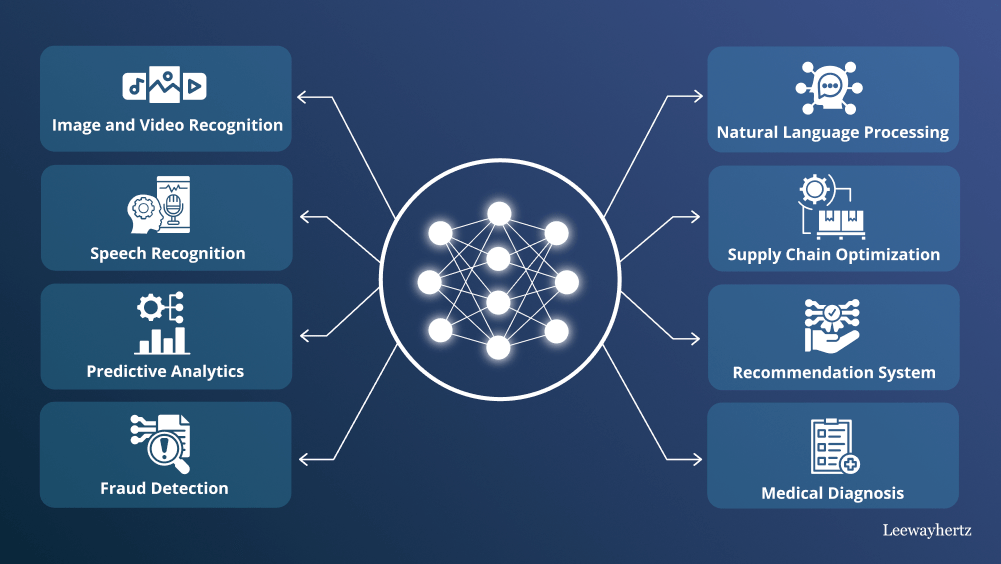
Deep learning is no longer just a concept—it is transforming industries around the world. Some of its most powerful applications include:
- Image Recognition: Thanks to CNNs, machines are now capable of identifying objects, people, and scenes with a high degree of accuracy. This technology powers everything from facial recognition to medical image analysis, where it helps doctors identify abnormalities like tumors.
- Natural Language Processing (NLP): Deep learning has dramatically improved our ability to understand and generate human language. It’s behind the intelligent responses of chatbots, the precision of Google Translate, and the growing capabilities of virtual assistants.
- Speech Recognition: Virtual assistants like Siri and Alexa rely on deep learning models to transcribe spoken language into text and process commands. These systems are becoming increasingly adept at understanding accents, slang, and context.
- Recommendation Systems: From Netflix to Amazon, deep learning helps platforms suggest content and products based on user behavior. These systems learn your preferences over time, making increasingly accurate and personalized recommendations.
- Autonomous Vehicles: Self-driving cars are powered by deep learning systems that can process vast amounts of sensor data, recognize obstacles, and make split-second decisions. This is one of the most advanced uses of AI, promising to revolutionize transportation.
Challenges and Future Directions
While deep learning has achieved remarkable success, there are still significant challenges that must be addressed.
1. Data Requirements
Deep learning models often require large amounts of labeled data to perform well. For instance, an image recognition model would perhaps need thousands of labeled images for each category (like cats or dogs) to accurately classify new images. In industries where labeled data is scarce, this can be a significant hurdle.
2. Interpretability
One of the biggest challenges in deploying deep learning in real-world applications is its lack of transparency. Neural networks often function as “black boxes,” where even their creators do not fully understand how they reach their decisions.
- Real-world example: Imagine a healthcare system recommending treatments. While the system might be highly accurate, doctors and patients want to know why a particular treatment was recommended. This lack of interpretability makes it difficult to trust AI systems in high-stakes environments like healthcare.
3. Computational Resources
Training deep neural networks requires substantial computational power, often involving high-end GPUs or cloud-based solutions. This can be expensive and limit access to the technology for smaller organizations or individuals.
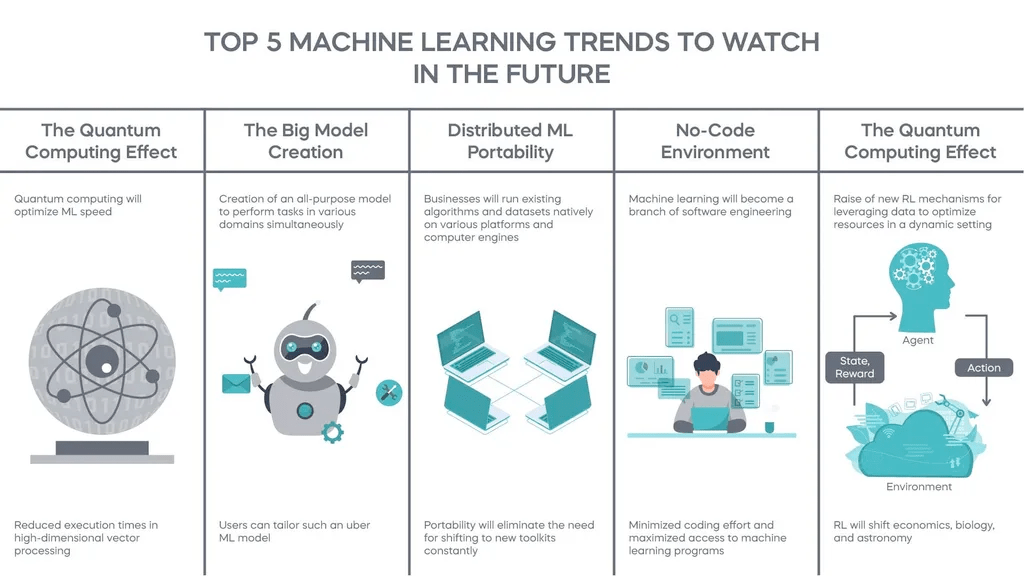
The Future: Fortunately, research is progressing in ways that would mitigate these challenges. Transfer learning—where pre-trained models are adapted for new tasks—can reduce the amount of data needed for training. Improving model interpretability is a key focus, with researchers working on techniques to better understand how neural networks make decisions. Advances in hardware and cloud computing will also make deep learning more accessible and efficient, helping push the field forward.
The Future of Deep Learning
The future of deep learning is full of promise. We’re already seeing it play a role in creative fields like music, art, and writing, where AI is collaborating with humans to create original works. As open-source platforms like TensorFlow and PyTorch become more accessible, deep learning will continue to democratize AI, making it easier for individuals and small teams to develop their own models.
Imagine a world where deep learning can understand emotions, generate lifelike art, or predict social trends with precision. AI will not just assist in technical tasks but become a creative collaborator, opening up new possibilities for human and machine interaction.
As I look back on my journey—from training my first neural network to watching AlphaGo’s historic victory—I’m reminded of the awe I felt at the potential of deep learning. This technology is not just a tool; it’s a paradigm shift that is redefining industries, challenging our understanding of intelligence, and pushing the boundaries of what machines can achieve.
Deep learning is reshaping the world, and we are only beginning to scratch the surface. With each breakthrough, I find myself more inspired, knowing that the future of artificial intelligence is limitless—and it’s a future that we are all part of whether you want to be or not.
 Axe M. Ahmed
Leave a comment